Récemment, j'ai remesuré
ici mon Hifiman HE400i 2020 sur diverses amplifications pour vérifier que les amplis l'impactaient de la même manière et que donc ce genre de casque sonne pareil sur tout les amplis, à moins que ces derniers n'apportent des distorsions supplémentaires et audibles.
Même si je reconnais à cette technologie un léger manque de dynamique, le résultat après égalisation est très satisfaisant sur des musiques classiques et baroques.
En écoutant des concertos de Vivaldi, le fruité des instruments, les environnements plus ou moins réverbérés et une image vraisemblable apportent beaucoup de satisfaction pour un casque à prix très raisonnable.
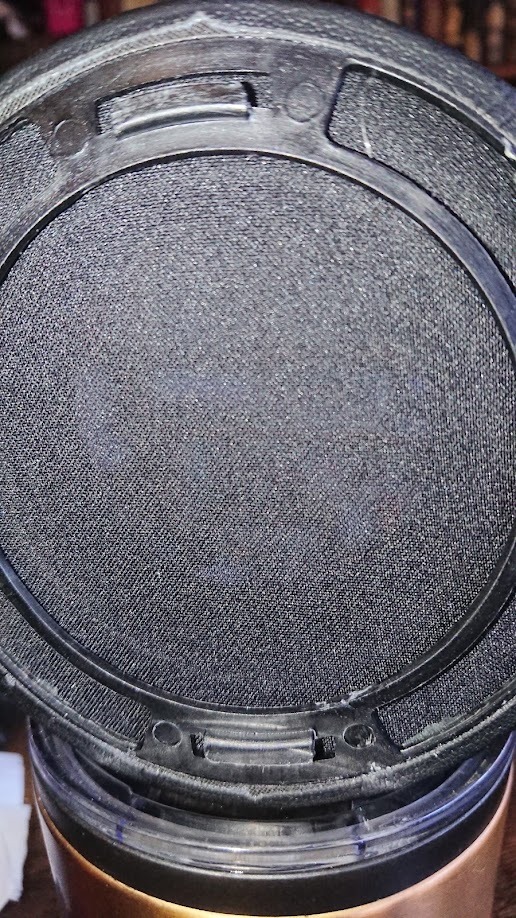
Néanmoins tout n'est pas optimum dans la réalisation Hifiman, car la fixation des pads n'est pas totalement fiable et une légère perte d'étanchéité du volume compris entre la membrane et votre tête modifie la réponse dans les basses avec une accentuation de celles-ci et une perte brutale dans les infra-basses, plus une tenue plus "flou".
Mon sentiment exprimé plus haut, en aout 2021, sur le côté "mou" de la restitution était peut être lié à cela, que j'ai heureusement corrigé depuis.
Au passage, il est intéressant de lire le point de vue de l'ingénieur en chef de chez AUDEZE sur la comparaison entre électrostatique et "planar" :
Our lead engineer has chimed in with this excellent comparison of Electrostatic and Planar Magnetic as it applies to Audeze headphones:
Planar magnetic and electrostatic headphones are very similar by nature of how they produce sound: both use a flat, flexible diaphragm which is moved by electromagnetic or electrostatic force.
All similarities end here, since the nature of these two forces is completely different.
Electrostatic force is limited by the physical dimensions of the design, reducing the distance between the diaphragm and stators increases the force but also increases the possibility of sticking the diaphragm to one of the stators.
By increasing the tension on the diaphragm, you reduce the stickiness but you lose low frequencies.
It's not easy to find the right balance between these two contradictory demands.
Electromagnetic force is limited only by the strength of the magnets used and the configuration of the magnetic circuit.
No stickiness or arcing and if your amplitude is within the mechanical limits you can achieve much higher sound levels than with electrostatics.
With our more efficient headphones (LCD-MX4, LCD-X, LCD-4z) you can easily reach 130 dB SPL (not recommended!) and we did it unintentionally on some occasions.
Basically, planar headphones can have much higher dynamic range than electrostatic headphones and that is their big advantage.
This comes with a heavy price though - the added weight of the magnets. Here are some examples:
CRBN driver - 75 grams each
LCD-5 driver - 97 grams each
LCD-2 driver - 158 grams each
LCD-4 driver - 186 grams each
On the other hand, the laws of physics are on the side of electrostatic headphones. Namely, acceleration is directly proportional to the moving mass.
Electrostatic headphones have much lighter diaphragms than planar headphones.
How much lighter depends on the type of film which is used as a substrate and how much metal (usually aluminum) is attached to it.
In our nano-scale diaphragms the metal (not always aluminum) is vacuum deposited directly on the film.
In all other cases aluminum is laminated to the film, introducing a layer of adhesive in between.
There is a difference between metal thicknesses as well, aluminum is very difficult to find thinner than 4.5 microns (at least in quantities needed for headphones production, if you are willing to order hundreds of tons it’s a different story) while a vacuum deposited layer of metal can be easily applied in sub-micron thicknesses.
Generally speaking, electrostatic diaphragms are about half the weight of nano-scale diaphragms which in turn are approximately five times lighter than laminated (ultra-thin) diaphragms.
A lighter diaphragm leads to faster, more accurate sound.
There is one more factor in favor of electrostatic headphones, driving force is uniform across the diaphragm while planar headphones have driving force only under the surface of the conductors, which never cover the whole diaphragm surface.
There are always parts of diaphragm that are just passively following and sometimes even partially moving out of phase.
Another disadvantage of planar drivers is that sound waves have to go around the magnets and when they combine with the sound coming from directly exposed portions of the diaphragm it can lead to some loss of details and transparency.
We mostly alleviated that problem with Fazors, but it's not completely gone.
Advantages and disadvantages are on both sides, what is more important is up to everyone to decide for themselves."